Massachusetts sportsbooks are sending explanations to bettors they limit under a new state transparency rule, but the notices are already prompting debate over whether they provide enough detail to help MA sports betting customers understand why their accounts were restricted.
The Massachusetts Gaming Commission unanimously approved a regulation in February requiring operators to notify bettors within 48 hours when limits are applied to their accounts and provide a specific explanation for the restriction, along with identifying which wagering markets are affected.
The MA sports betting rule, which went into effect Monday, was designed to address longstanding complaints from bettors who said sportsbooks often restricted or limited accounts without explanation.
MA sports betting change for transparency
During discussions leading up to the vote, commissioners repeatedly emphasized that operators would need to provide more than generic explanations.
“I’m comfortable doing this and we’ll know pretty quickly who is making good faith efforts and what, if any tweaks we need to make with this, to accomplish that transparency goal,” Commissioner Paul Brodeur said before the vote, adding that sportsbooks could not simply tell users it was a business decision.
Commission Chair Jordan Maynard said he believed the rule would force operators to review how and why limitations are applied.
Sportsbooks notify bettors
Legal Sports Report reviewed limitation notices from DraftKings, Fanatics and Penn Entertainment‘s theScore Bet that hit on multiple reasons for limits, including suspected coordinated wagering, arbitrage betting, and trying to exploit potential latency with live markets.
The rule applies not only to future limitations, but also to customers whose accounts were already restricted before the requirement took effect. As a result, some bettors who had been limited months or even years ago began receiving explanations this week for the first time.
BetMGM, Caesars, and FanDuel are also required to provide limitation notices under the rule, though LSR had not obtained examples from those operators as of publication.
MA sports betting alert examples
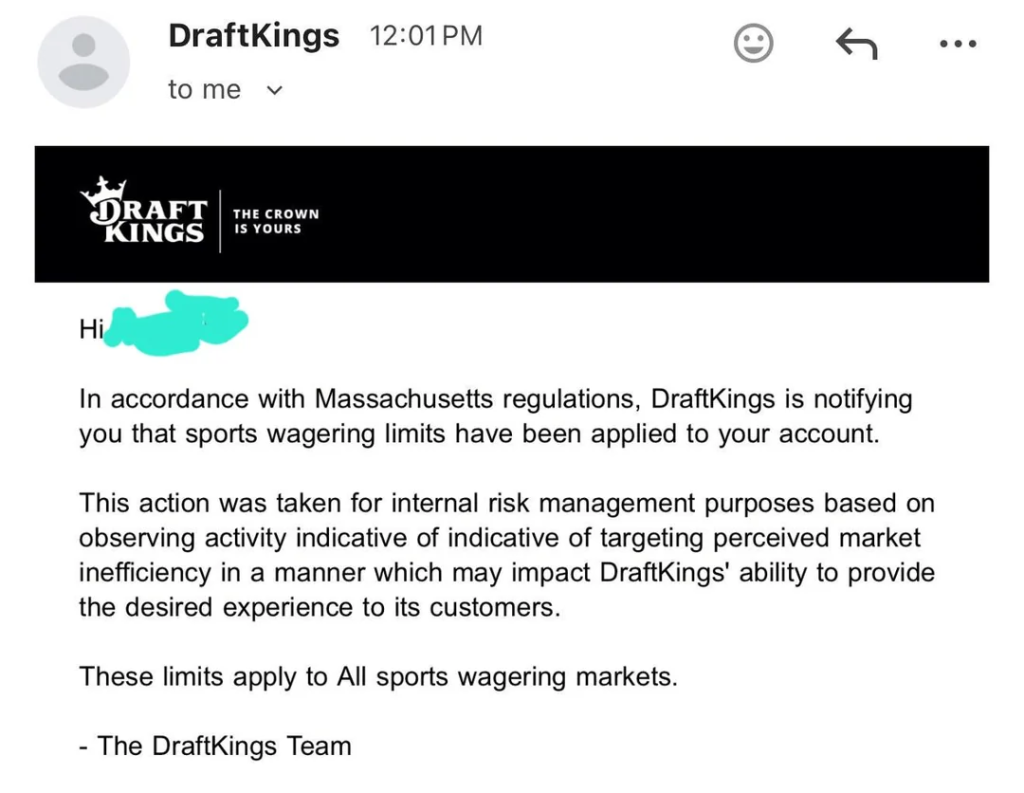
One DraftKings notice said limits were imposed for “internal risk management purposes” after the company observed activity “indicative of targeting perceived market inefficiency.”
Most of the Fanatics notifications seen said limits were reduced because the sportsbook observed behavior aligned with “a network of restricted users that signal potential arbitrage positions.”
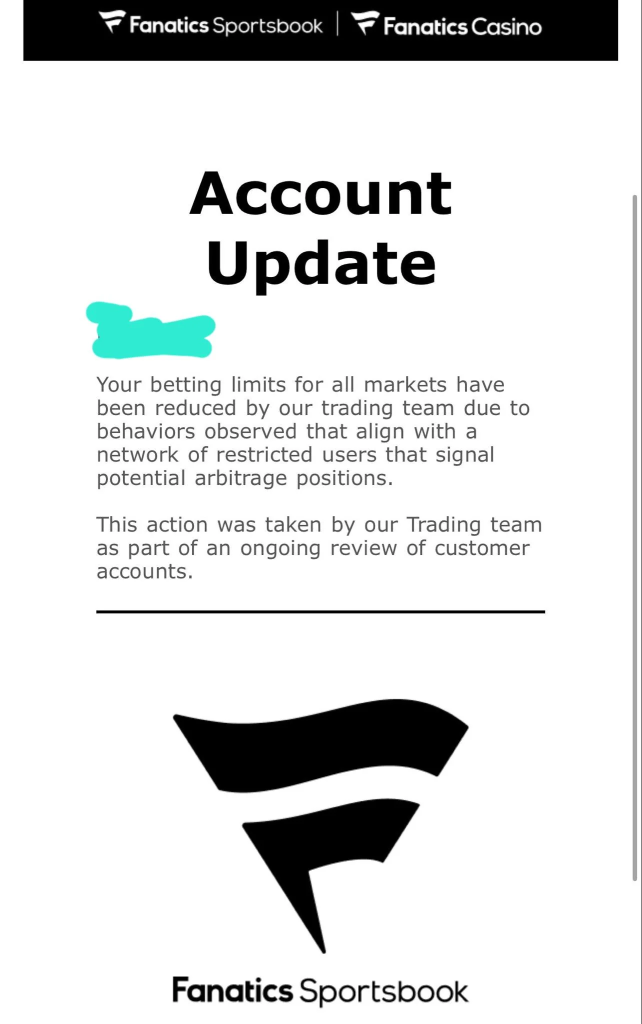
As a result, bettors learn the general category of behavior that prompted the restriction, but not necessarily what actions caused the sportsbook to reach that conclusion. That distinction could become a test of whether the rule achieves the transparency commissioners envisioned.
Bettors still looking for answers
The notifications have already sparked debate among sports bettors online.
Some users viewed the notices as confirmation that sportsbooks are limiting accounts for sharp betting activity, arbitrage opportunities, or attempts to exploit pricing discrepancies. Others argued the explanations still leaving them guessing about the actions that led to the restriction, echoing concerns commissioners raised before adopting the rule.
Massachusetts is the first state to require sportsbooks to explain wagering limits. The next question may be whether regulators believe the explanations being provided are specific enough to achieve the transparency goals they envisioned.
Commissioners could revisit the requirements if they determine bettors are not receiving meaningful enough explanations.