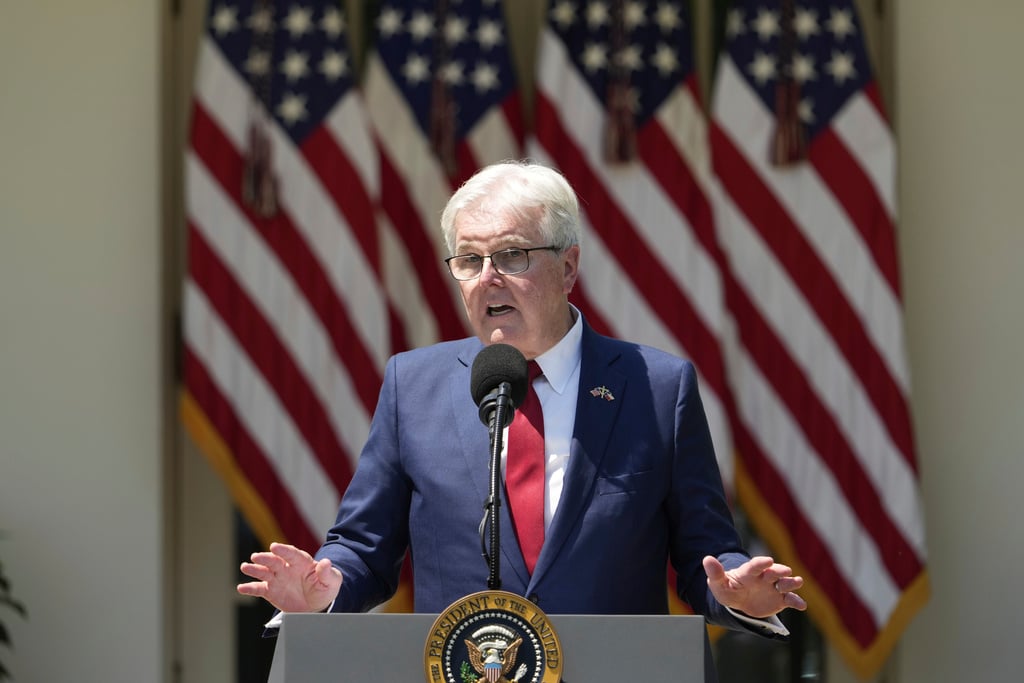
Texas Lt. Gov. Dan Patrick, a staunch sports betting opponent, has turned his sights on prediction markets.
Earlier this spring, Patrick directed senators to figure out how to close “gambling loopholes” that allow for prediction markets like Kalshi and Polymarket to operate in the Lone Star State. As president of the Senate, Patrick has been a roadblock in pursuits to legalize sports betting in Texas.
Patrick’s call for legislative action comes as state legislatures across the country are exploring their options as state gambling regulators are embroiled in lawsuits with operators and the federal Commodity Futures Trading Commission. State regulators argue sports event contracts traded on prediction markets are unlicensed sports betting.
Patrick’s ask against prediction markets
Patrick asked the State Affairs Committee to study how the federal oversight has been used to “circumvent Texas gambling prohibitions.” The committee does not have any meetings scheduled, which can be held in even-numbered years when the legislature does not meet.
“Study the sudden inundation of prediction market gambling and exploitation of federal law to circumvent Texas gambling prohibitions by allowing users to place bets on the outcome of elections and other events,” his directive reads. “Examine the relationship between federally regulated derivative markets and state-prohibited gambling.”
He also wants recommendations on how to ensure the integrity of Texas’ sports and elections.
Kalshi recently suspended multiple political candidates for investing in their own races, including Zeke Enriquez, who was running for Congress in Texas.
Would Texas action work?
State legislatures looking to install regulations or prohibitions on prediction markets might be for naught, at least until the Supreme Court rules on the issue.
The CFTC and operators argue the event contracts are swaps and regulated federally, just like exchange-traded financial contracts.
Regulators, however, are arguing they are illegal gambling and should acquire sports betting licenses and pay state taxes. At least 15 states have sued or sent cease and desist orders to prediction markets.
Legal action against prediction markets
Three of the prediction market lawsuits are in federal appeals courts. Two have completed oral arguments, while a third is scheduled for next week.
States involved in the litigation including California, Nevada, New Jersey and New York. Texas would add another sizable opponent in the state vs. federal battle to regulate prediction markets.
There are also bills in U.S. Congress aiming to tighten guardrails around prediction markets.
Texas sports betting journey
Texas lawmakers have considered sports betting for the past several sessions. In 2023, a Texas sports betting bill passed the House, but Patrick refused to let the Senate take up the bill.
In 2025, the bill was “dead on arrival” as a group of newly-elected representatives vowed to ensure the issue’s failure.
Gov. Greg Abbott has at times said he had “no objections” to gambling expansion, but also said last year he is “simply not there yet” on legalizing resort-style casinos or Texas sportsbooks.
The political football comes as industry proponents pour millions into the issue. Polls have shown 60% of Texans favor sports betting expansion.